
Skip to content

Trade Presets

A preset stores a reusable trading configuration so repeated buys or sells use consistent amounts and execution rules.

What a preset stores

  • Buy or sell direction
  • Default amount and editable amount buttons
  • Slippage
  • Gas fee settings
  • sample or mev transaction mode
  • Optional exit behavior when saved from a trade

Source tokens priority is configured separately in trade display settings.
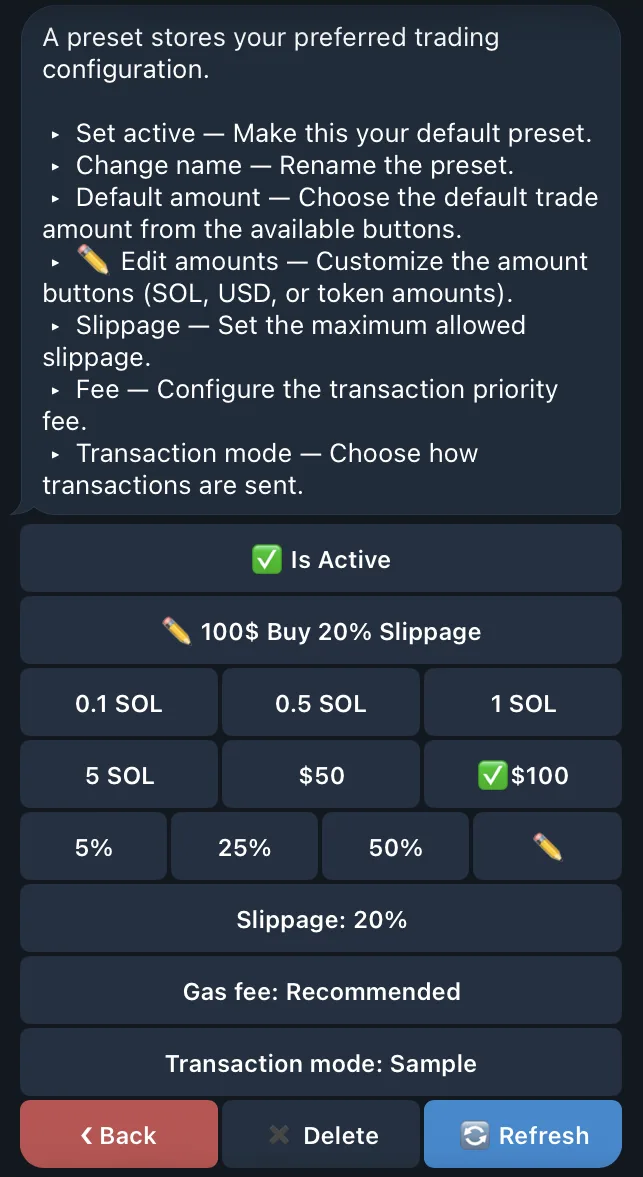
The QZAR preset editor lists the stored direction, amount buttons, slippage, gas fee, and transaction mode of a single preset

Create from a trade

  1. Build a buy or sell with the exact settings you want
  2. In the Presets section, select Save as preset
  3. Give it a short strategy-based name
  4. Open SettingsTrade Presets to review and refine it
  5. Set it active only after checking direction, amount, slippage, fee, mode, etc

Apply a preset

Open a trade and select the preset. QZAR copies its stored settings into the current request. Review the resulting values before executing because pool liquidity and market conditions are not stored in the preset.
Presets do not adapt to the market
A preset improves consistency, not safety. "Fast" or "Snipe" names do not adapt automatically to congestion, liquidity, or token risk.
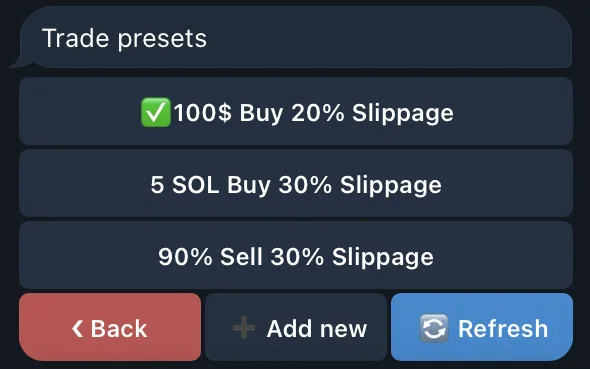
The QZAR Trade Presets list shows saved buy and sell presets with the active one marked and options to add or edit a preset

Suggested organization

Use names that describe behavior:

  • Test Buy — small amount, conservative slippage, Recommended fee
  • Liquid Market — normal size and standard submission
  • Urgent Exit — sell percentage with a tested higher-priority setup

Avoid copying fixed recommended percentages from other traders. Test with your own trade size and pools.