
Search here or press/
Search
A DCA order spreads a budget across several buys and adds a price boundary to the schedule. It is useful when you want gradual exposure without continuing to buy after the market leaves your acceptable range.
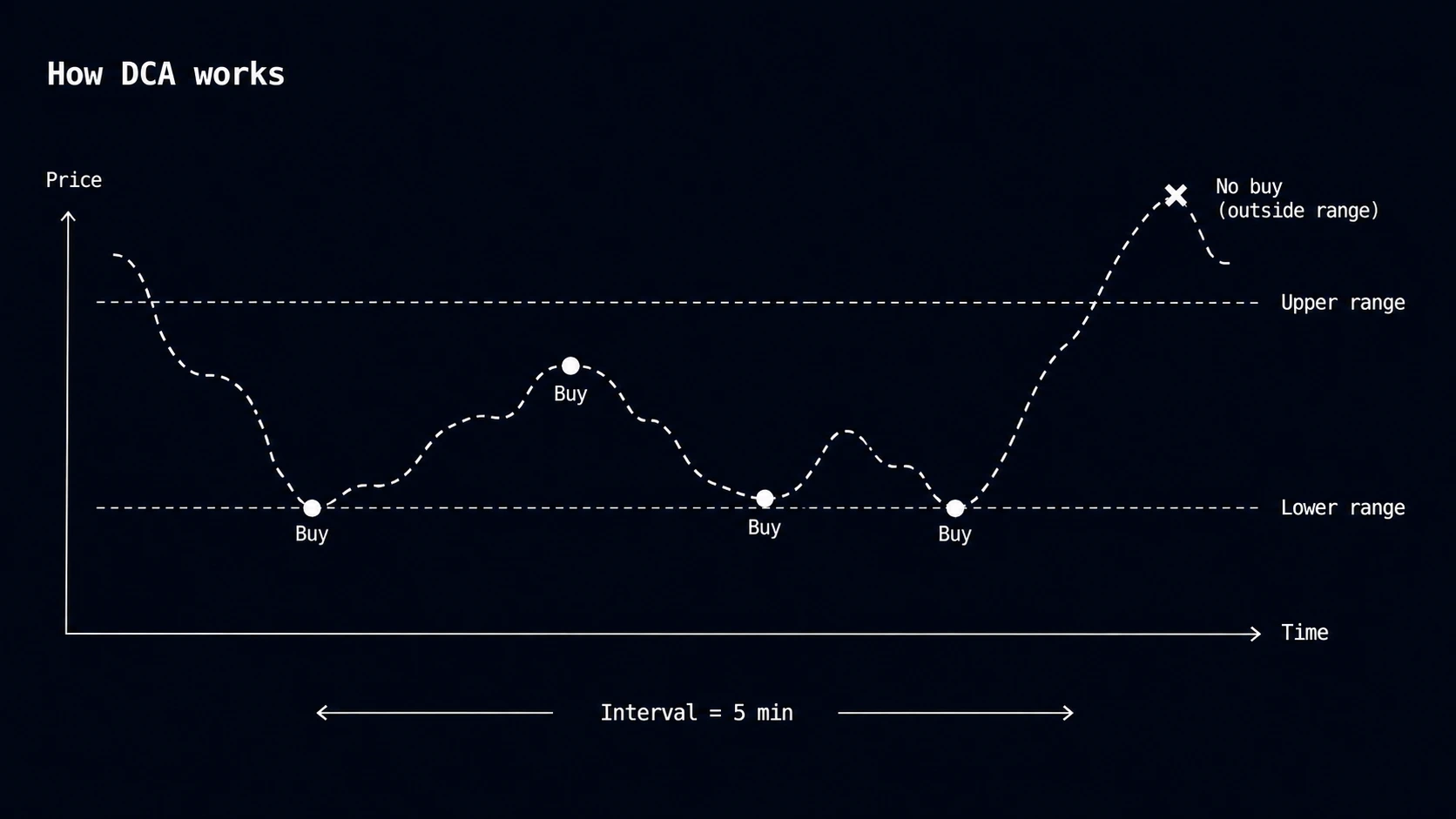
The range can use absolute prices or percentage changes from the current price. At every interval, QZAR checks the range before placing the next buy.
| Setting | Meaning |
|---|---|
| Total budget | The most the order can spend |
| Range | The price band in which buys are allowed |
| Number of orders | The number of buys to complete |
| Interval | The time between eligible buys |
| Jitter (optional) | A random delay of 1–60 seconds added to each buy |
Each buy is sized as Total budget / Number of orders. If the price is outside the range, the schedule waits without consuming a buy. It resumes when the price returns and runs until all scheduled buys have completed or the order is canceled.
Suppose you set a 10 SOL budget, 5 buys, a 30-minute interval, and a price range of $0.80–$1.00. Each completed buy spends 2 SOL:
The order completes after five successful scheduled buys; time spent waiting outside the range makes the total run longer.
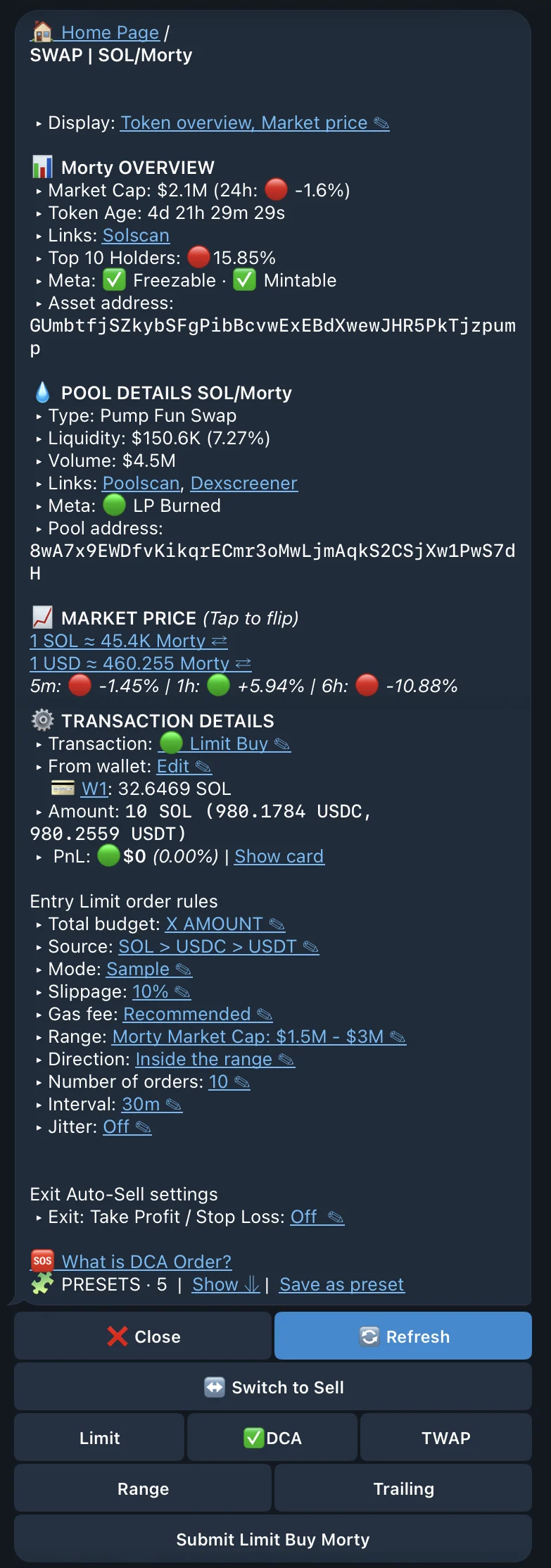
Choose DCA from a token or pool trade menu, then set:
For wallet selection, source tokens, execution settings, optional TP/SL, and submission, follow the shared flow on the Classic Limit Order page.
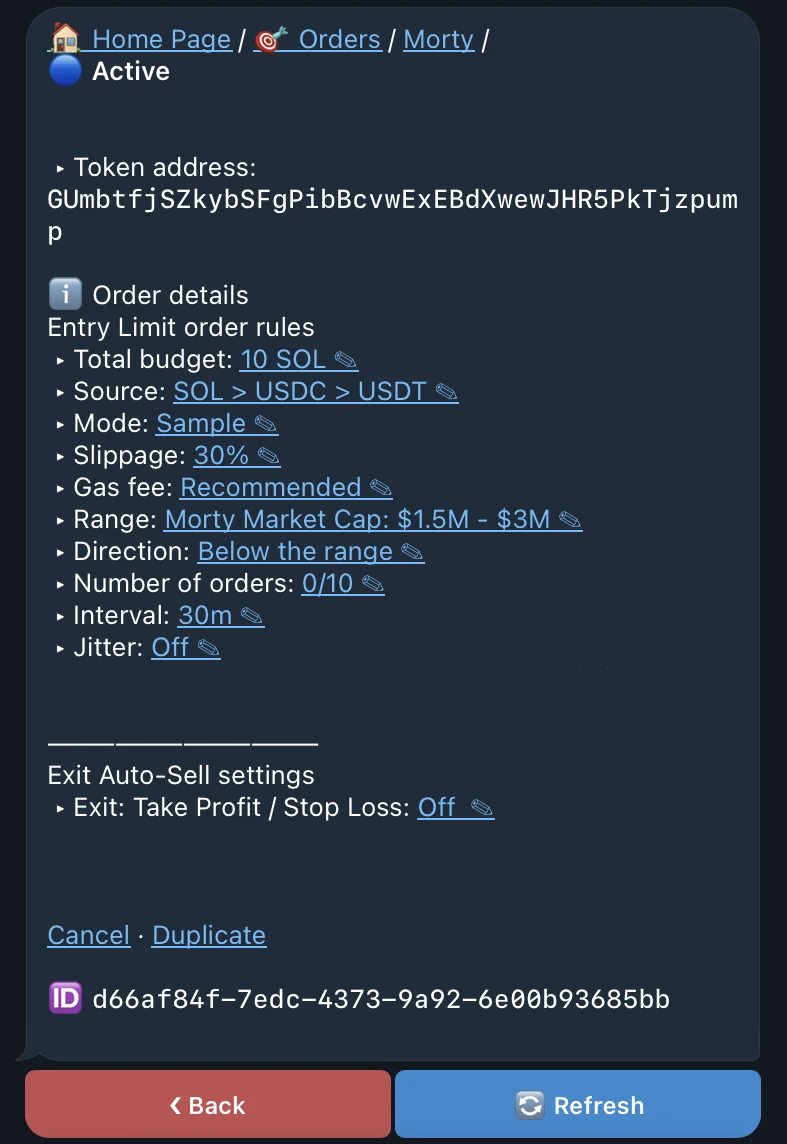
The order detail shows buys completed and remaining, amount per buy, current range status, and time until the next buy. Waiting for range means the schedule is intact but price is currently ineligible; Running means at least one buy has completed.
Use a wider range if volatility keeps interrupting the schedule, and check that Number of orders × Interval produces a useful minimum run length. A submitted buy still depends on route availability, slippage, balance, and fee priority at that moment.